Free Customization Solution
Our furniture come from the minds of BMS' respected designers with more than 30 years' experience in the industry.
Get Free Plans
TL;DR: Understanding Minimum Order Quantities (MOQ), managing lead times, and optimizing logistics are critical for successful B2B furniture sourcing from China. This 2026 guide, with expert insights from Victor, details strategies for negotiating MOQs, accurately calculating production schedules, and navigating international shipping complexities. Focus on clear communication, robust contracts, and strategic planning to ensure efficient, cost-effective, and timely delivery of your furniture orders.
For B2B furniture buyers, navigating the complexities of international procurement extends beyond merely finding the right product and manufacturer. Three operational pillars—Minimum Order Quantity (MOQ), Lead Times, and Logistics—fundamentally dictate the efficiency, cost-effectiveness, and ultimate success of your sourcing strategy. Mismanagement in any of these areas can lead to significant delays, increased costs, and missed market opportunities.
This 2026 guide provides a comprehensive breakdown of these critical factors, offering actionable strategies for B2B buyers sourcing furniture from China. We integrate the invaluable experience of Victor, Export Sales Director at BMS FURNITURE, who brings 15 years of high-end furniture export expertise.
Definition: Minimum Order Quantity (MOQ) refers to the smallest quantity of a product that a manufacturer is willing to produce and sell in a single order. MOQs are set to ensure profitability for the factory by covering fixed costs associated with production setup, raw material procurement, and labor.
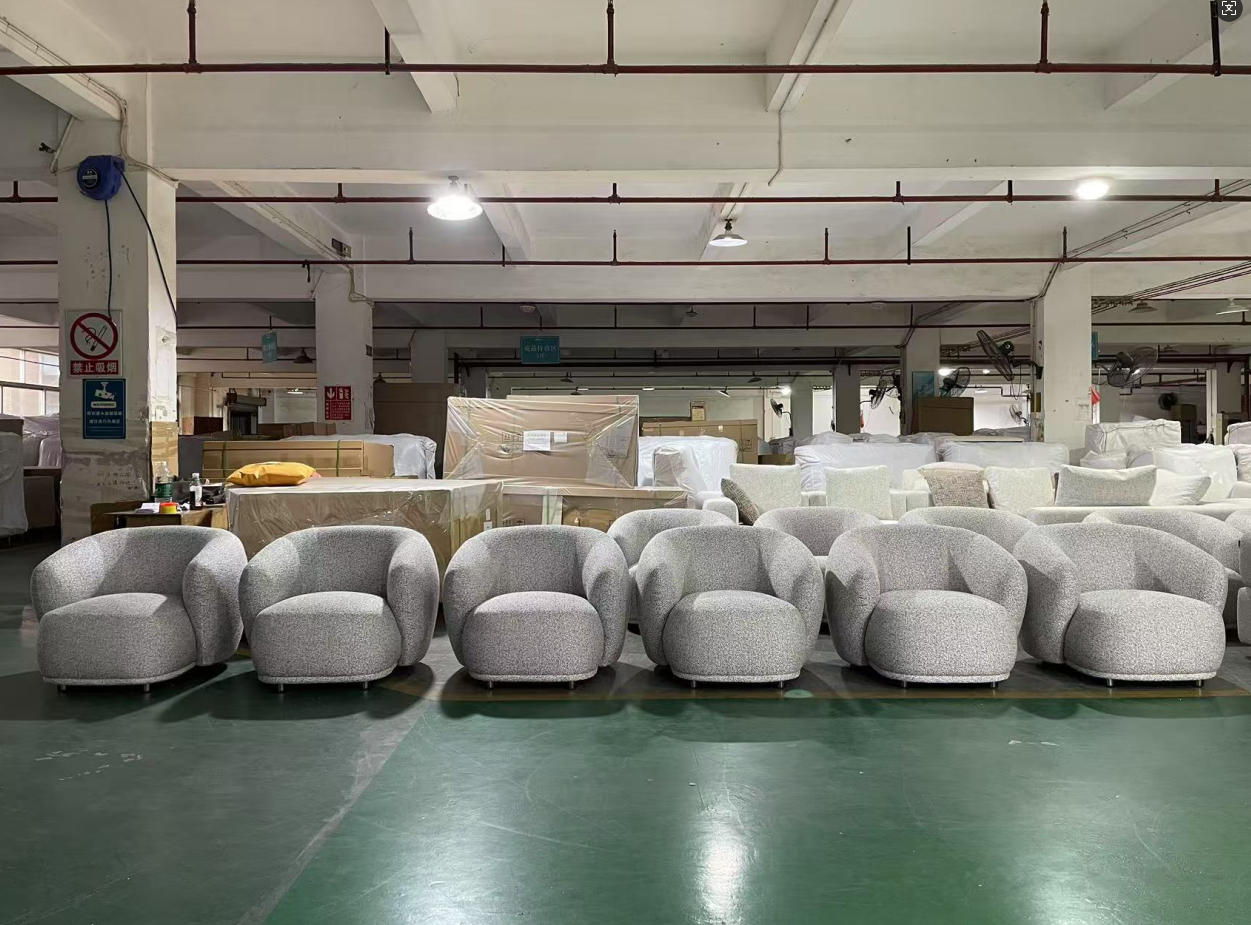
While MOQs are a reality, they are often negotiable, especially for long-term partners or strategic orders.
Victor’s Expert Opinion: “For new buyers, MOQs can seem daunting. At BMS FURNITURE, we understand that market testing is crucial. That’s why we offer flexible MOQ solutions, including cumulative MOQ options where tooling fees are refunded once a certain volume is reached within 12 months. Always discuss your specific needs; a good factory will work with you to find a mutually beneficial solution.”
BMS CASA recognizes the diverse needs of B2B clients and offers tailored MOQ solutions:
Definition: Lead time refers to the total time elapsed from the confirmation of an order (and often deposit payment) to the completion of production and readiness for shipment. It encompasses various stages, each with its own duration.
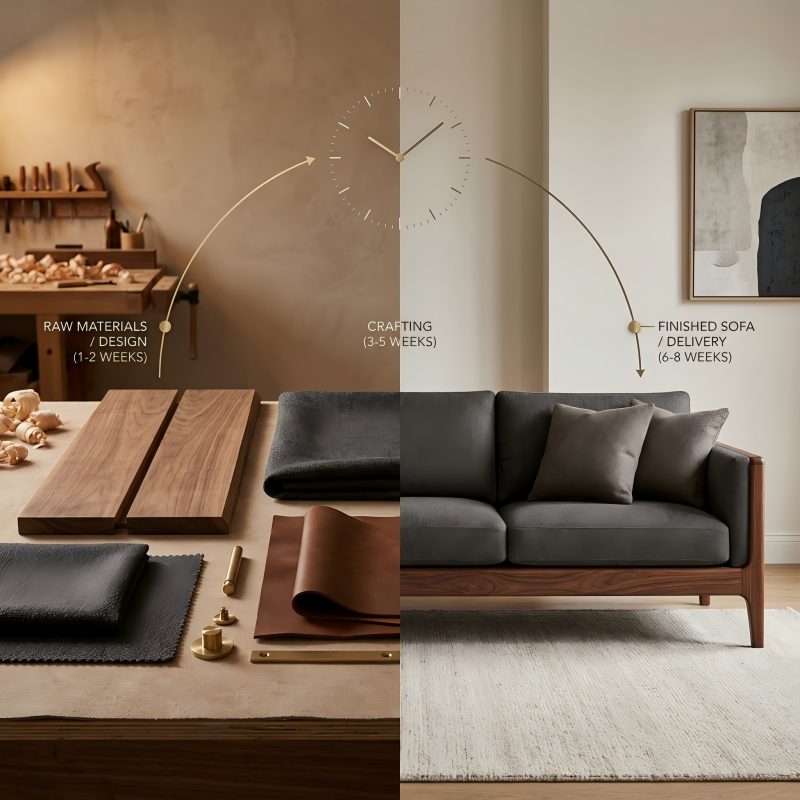
Understanding each stage helps in accurate planning and expectation management:
| Stage | Typical Duration | Key Activities |
|---|---|---|
| Material Sourcing | 1-4 weeks | Procurement of fabrics, leather, wood, foam, and hardware. Longer for custom/certified materials. |
| Sample/Prototype Approval | 2-6 weeks | Design finalization, sample production, buyer approval. Multiple revisions can extend. |
| Production Scheduling | 1-2 weeks | Allocating factory resources, slotting orders into the production line. |
| Manufacturing | 4-8 weeks | Cutting, sewing, framing, assembly, upholstery, finishing. Varies by complexity/volume. |
| Quality Control & Packaging | 1-2 weeks | Final inspections, rectifications, and preparation for shipment. |
Victor’s Expert Opinion: “Never underestimate the impact of Chinese national holidays, especially the Chinese New Year. Production can halt for weeks. Plan your orders well in advance to avoid critical delays. Also, always build in a buffer for unexpected issues; a realistic lead time is better than an overly optimistic one.”
Definition: Logistics in furniture sourcing encompasses the entire process of transporting finished goods from the factory floor in China to the buyer’s designated destination, including packaging, customs clearance, freight, and delivery.

Efficient logistics management is crucial for cost control and timely delivery.
| Aspect | Description | Key Considerations |
|---|---|---|
| Incoterms | Define responsibilities and costs between buyer and seller. | EXW, FOB, CIF, DDP. Choose based on the control desired and risk tolerance. |
| Shipping Methods | FCL (Full Container Load), LCL (Less than Container Load), Air Freight. | Volume, urgency, cost-effectiveness. FCL for large, LCL for small, Air for urgent/high-value. |
| Customs Clearance | The process of getting goods through customs in the destination country. | Accurate documentation (invoice, packing list, B/L), product certifications. Errors cause delays. |
| Cargo Insurance | Protection against loss or damage during transit. | Essential for high-value goods. Type depends on Incoterm. |
Victor’s Expert Opinion: “Never compromise on packaging. High-end furniture requires robust protection for long-distance shipping. At BMS FURNITURE, we use five-ply corrugated cartons, corner protectors, and foam inserts as standard. Also, choose your freight forwarder wisely. A good one specializes in furniture, understands your destination’s regulations, and can proactively manage issues, saving you money and stress in the long run.”
Ensure all necessary documents are prepared accurately and on time:
Q1: How can I reduce the MOQ when ordering custom furniture from China?
A1: To reduce MOQ, consider offering a higher unit price, combining orders for different products, or committing to a long-term purchasing agreement. Some manufacturers, like BMS FURNITURE, offer cumulative MOQ programs where initial tooling fees are refunded upon reaching a volume target within a set period. Victor advises, “Always communicate your needs transparently; flexibility is often possible.”
Q2: What is a realistic lead time for custom furniture production in China?
A2: A realistic lead time for custom furniture (OEM/ODM) typically ranges from 8 to 16 weeks, encompassing material sourcing, sample approval, production, and QC. This can extend further for highly complex designs or during peak seasons/holidays. Victor suggests, “Always add a 2-4 week buffer to your planned schedule to account for unforeseen circumstances.”
Q3: Which Incoterm is best for B2B furniture buyers importing from China?
A3: For most B2B furniture buyers, FOB (Free On Board) is often recommended. It gives the buyer more control over freight costs and choice of forwarder, while the seller handles local transport and customs clearance in China. DDP (Delivered Duty Paid) offers maximum convenience but usually at a higher cost. Victor advises, “Understand your capabilities. If you have a trusted freight forwarder, FOB is efficient. If you prefer a hands-off approach and are willing to pay for it, DDP simplifies the process.”
Q4: How important is cargo insurance for furniture shipments from China?
A4: Cargo insurance is critically important. Given the long transit distances and potential for handling issues, furniture is susceptible to damage. Without insurance, any loss or damage could be a significant financial blow. Always ensure your cargo is adequately insured, especially when dealing with high-value goods. Victor states, “Never skip cargo insurance. It’s a small cost for immense peace of mind.”
Q5: What is the typical payment structure for B2B furniture orders with Chinese factories?
A5: The standard payment structure usually involves a 30% upfront deposit (via T/T) to commence production. The remaining 70% balance is typically paid upon completion of production, often after a successful Final Random Inspection (FRI), and prior to shipment. Secure payment methods and linking payments to production milestones are recommended practices.
Successful B2B furniture sourcing from China in 2026 is a strategic endeavor that, when executed correctly, yields significant competitive advantages. By meticulously planning, thoroughly vetting suppliers, implementing robust quality control, and managing logistics effectively, B2B buyers can mitigate risks and cultivate sustainable, profitable partnerships. As Victor consistently advises, “The objective extends beyond a mere transaction; it is about forging a partnership that comprehends your brand’s vision and consistently delivers quality. Invest diligently in due diligence, clear communication, and mutual trust.” This strategic investment will generate long-term value and a substantial competitive edge in the global furniture market.
Our furniture come from the minds of BMS' respected designers with more than 30 years' experience in the industry.
Get Free PlansBMS designers would love to add their imaginative but professional ideas to your design selection and customization.
Contact Now
BMS is always here to help you style the furniture you need, your way.
Be the first to get our latest styles and offers.
NO.9 Gegao Road,Gegao Industrial Park,Longjiang Town,Shunde District, Foshan, China
+86-13630170664
director@bms-f.com