Free Customization Solution
Our furniture come from the minds of BMS' respected designers with more than 30 years' experience in the industry.
Get Free Plans
Sourcing high-end furniture from China in 2026 demands a meticulous approach to quality control and logistics. This guide outlines the critical steps for a successful export process:
The global furniture market continues its dynamic evolution, with China remaining a pivotal hub for manufacturing and export. For international buyers, interior designers, and luxury brands, navigating the complexities of sourcing high-end furniture from China in 2026 requires more than just identifying a supplier; it demands a comprehensive understanding of quality control, packaging standards, and intricate logistics. This guide, enriched with insights from BMS FURNITURE’s Export Director, Victor, provides a B2B roadmap to ensure your procurement process is seamless, secure, and ultimately, successful.

Victor’s Expert Insight: “In my 15 years of experience, having served Fortune 500 companies, I’ve seen that the true differentiator in China furniture export isn’t just price, but a relentless commitment to quality and transparent communication throughout the entire supply chain. It’s about building trust, piece by piece.”
Before any order is placed, the cornerstone of a successful export journey is selecting the right manufacturing partner. This goes beyond reviewing catalogs or visiting showrooms. A thorough factory audit is crucial to assess a supplier’s capabilities, quality management systems, and ethical practices.
Key Considerations for Supplier Selection:
Victor’s Expert Insight: “Many buyers focus on the product, but the factory’s internal QC management system is equally, if not more, important. We invite clients to audit our facilities, not just to see our production lines, but to understand our commitment to quality at every single step. It’s about verifying their processes, not just their promises.”

Effective quality control is a continuous, multi-layered process that spans the entire production cycle. BMS CASA implements a rigorous four-stage inspection protocol to minimize risks and ensure every piece of furniture meets the highest standards.
| Inspection Stage | Purpose | Key Checks |
|---|---|---|
| Pre-Production Inspection (PPI) | Verify raw materials, components, and production plans before mass manufacturing. | Material verification (type, grade, quantity), component quality, factory readiness, golden sample approval. |
| During Production Inspection (DPI) | Monitor quality and consistency when 20-50% of the order is complete. Also check at each step: frame, foam, cover, etc. to make sure each step complies with the quality standard. |
Workmanship, assembly quality, dimensional accuracy, functionality tests, material usage. |
| Pre-Shipment Inspection (PSI) | Final check of finished products, quantity, and overall quality against specifications. | Appearance, functionality, safety, quantity, labeling, packaging integrity. |
| Container Loading Supervision (CLS) | Ensure correct loading techniques, quantity verification, and container condition. | Container inspection, quantity check, proper stacking, protection, sealing. |
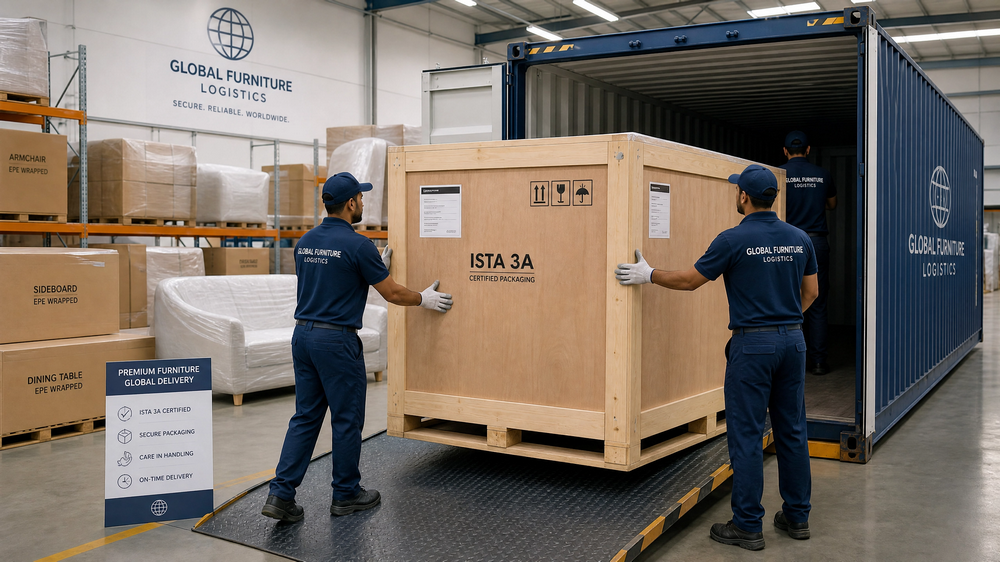
The journey from factory floor to final destination can be arduous. Inadequate packaging is a leading cause of damage in transit, resulting in costly returns and dissatisfied clients. Adhering to international packaging standards is paramount.
ISTA 3A Packaging Standard:
ISTA (International Safe Transit Association) 3A is a performance test designed for individually packaged products weighing 150 lb (70kg) or less, typically shipped through parcel delivery systems. It simulates the stresses of transit, including atmospheric conditioning, vibration (random), and various shock tests (drop, rotational flat drop, bridge impact) [1]. While 3A is a good baseline, high-end furniture often requires more robust solutions.
Beyond ISTA 3A: Custom Crating for Luxury Furniture:
For larger, heavier, or more delicate luxury furniture items (e.g., marble dining tables, intricately carved cabinets), custom wooden crating is essential. This involves:
Victor’s Expert Insight: “ISTA 3A is the absolute minimum for high-end furniture, especially for parcel shipments. But for our luxury pieces, particularly those with stone, glass, or intricate designs, custom crating is non-negotiable. It’s an investment that pays off by ensuring zero damage and maintaining the product’s pristine condition upon arrival. We also ensure clear technical drawings of the packaging are approved by the client. More importantly, besides the crating, the box and internal protection are also essential. Inadequate internal protection often leads to product damage, even when the outer box remains perfect upon arrival at your warehouse. A similarly important factor is to handle it properly when you unpack the box, as luxury furniture is often very big and large; it is easy to cause damage if handled improperly.”
The global logistics environment is constantly evolving. In 2026, several trends and compliance requirements are shaping the China furniture export process:
Victor’s Expert Insight: “In 2026, planning for ‘buffer time’ in your logistics schedule is more critical than ever. Geopolitical shifts, evolving trade routes, and stricter compliance checks mean unforeseen delays can occur. A reliable logistics partner, coupled with proactive communication, is your best defense. And always, always ensure your technical drawings and ‘Golden Samples’ are meticulously approved to avoid any misunderstandings.”

Successfully navigating the China furniture export process in 2026 demands expertise, vigilance, and a robust partnership. From stringent quality control at every stage to meticulous packaging and an understanding of the evolving logistics landscape, each element plays a vital role in safeguarding your investment and ensuring client satisfaction. BMS CASA stands as your trusted partner, combining Italian design heritage with Chinese manufacturing excellence, offering not just furniture, but a seamless, quality-assured sourcing experience.
Q: Why is a four-stage QC process essential for furniture export from China?
A: A four-stage QC process (Pre-Production, During Production, Pre-Shipment, and Container Loading Supervision) ensures quality is monitored at every critical point, from raw materials to final loading. This proactive approach minimizes defects, reduces rework costs, and guarantees the final product meets specifications, preventing costly issues down the line.
Q: What is ISTA 3A, and why is it important for furniture packaging?
A: ISTA 3A is an international standard for performance testing of packaged products weighing up to 150 lbs, simulating the stresses of parcel delivery. It’s crucial for furniture packaging as it helps ensure products can withstand the rigors of transit, reducing damage rates, insurance claims, and improving customer satisfaction. For larger or more delicate luxury items, custom crating often goes beyond 3A standards.
Q: How do 2026 logistics trends impact furniture sourcing from China?
A: In 2026, logistics are impacted by increased digital compliance requirements (e.g., new BIS rules, updated China licensing), stricter sustainability regulations (CARB, EUDR), and a shift towards resilient global supply chain management. These factors necessitate careful planning, proactive communication, and potentially longer lead times, making “buffer time” in schedules essential.
Our furniture come from the minds of BMS' respected designers with more than 30 years' experience in the industry.
Get Free PlansBMS designers would love to add their imaginative but professional ideas to your design selection and customization.
Contact Now
BMS is always here to help you style the furniture you need, your way.
Be the first to get our latest styles and offers.
NO.9 Gegao Road,Gegao Industrial Park,Longjiang Town,Shunde District, Foshan, China
+86-13630170664
director@bms-f.com